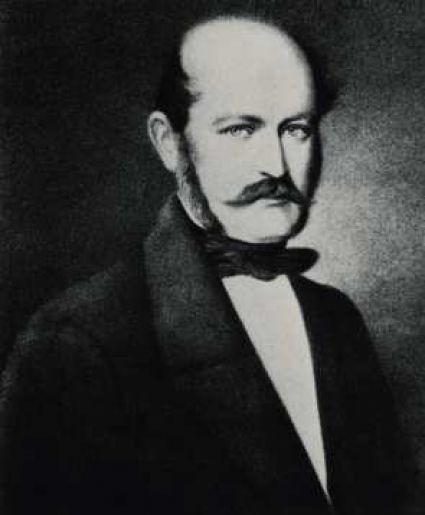
A short time after the death of Semmelweis,
Louis Pasteur showed the existence of bacteria and their role in some forms of disease, which came to be known as the germ theory.
Robert Koch reinforced the cause and effect relationship between bacteria and disease.
Joseph Lister introduced other forms of administering chemical compounds to reduce the spread of disease in operating theatres.
Much later
Alexander Fleming, in conjunction with
Howard Florey and
Ernst Chase (and others) introduced a different class of chemical control using antibiotics which resulted in another level of reduction in disease. However this is more closely targetted on the bacteria causing disease and also paradoxically more subject to failure than antiseptic chemicals.
At about the same time other physicians had made links between surgical procedures and the spread of disease, but possibly they were less systematic in their use of antiseptic chemicals, and had less clear-cut information on which to base their theories. In 1843 in the USA,
Oliver Wendell Holmes (senior) came to similar conclusions about childbed fever. This formed the basis of a storyline in a recent (fiction) book
The Bone Garden
by Tess Gerritsen.